2026 Industry Impact Award: Geraldine Link, Pioneering Partner
BY Heather B. Fried
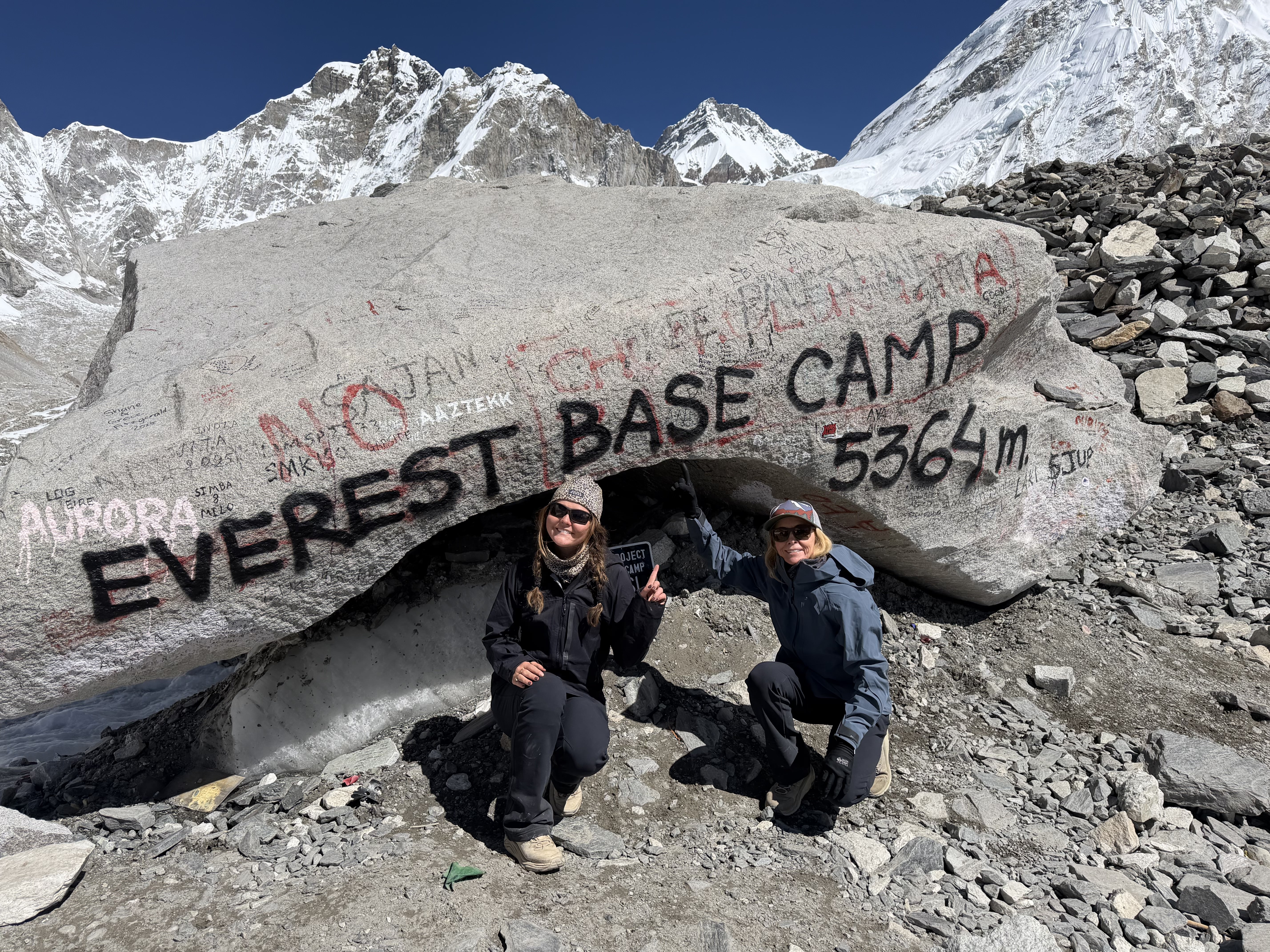
I’m going to have to convince her to dig deep and keep on going up.
That was the thought cycling through Geraldine Link’s head in the wee hours of that frigid fall morning, nine days into their trek to Everest Base Camp last October. She didn’t have to deploy her powers of persuasion, though. In a twin bed across from Link, her 23-year-old daughter, Sophie, was preparing the same pep talk.
The worst GI bug imaginable, likely norovirus, stymied their group in the Village of Pheriche at 14,000 feet. They were behind schedule and already exhausted from miles at high altitude. Add to that dehydration, cold, zero appetite or energy, and option B — a helicopter down to Kathmandu at daylight — was sounding pretty tempting. Sticking to the original plan meant pressing on to Base Camp at 17,600 feet by way of two more villages (Lobuche at 16,210 feet and Gorak Shep at 16,994 feet), doing double distance in one day to cover the ground they’d lost to double dragon (both gates wide open).
With an outstretched arm, Sophie fist bumped her mom and voiced their mutual contemplation aloud, “We are Colorado girls, and we don’t back down!” After many months of training and making it that close, it wasn’t in their DNA to surrender.
They shared a laugh, and then got to it, hiking for nine hours that day. Their group consisted of 14 trekkers, one World Wide Trekking guide (an organization founded by a Snowbird patroller), 10 Sherpas and six yaks. Alongside the Links, the two other women hiking with them also made it to Base Camp while half the guys, humbled by their various ailments, hitched a helicopter ride.
Tenacious, fierce, strong, authentic. These traits — common characterizations uttered from industry colleagues and friends — propelled Link to their destination that day, and to the top of her game as NSAA’s director of public policy for nearly 30 years.
Un-Lawyer-Like
“Prior to law school, I worked three different legal jobs, including an immigration law project, a lobbying firm in D.C. and the Colorado state legislature,” Link said. “I wanted to be sure that law school was the right path for me.”
Turns out, it was, insofar as leading her down a path toward the ski industry. Currently NSAA’s most tenured team member, Link has spent almost her entire career advocating ski area interests and sustainable business practices. After graduating law school at CU Boulder in 1993, her brief time at the Denver office of Arnold & Porter, working as an associate in the environment and natural resources practice group, had her plenty prepared for the kind of work to come.
“We represented Vail, Aspen and Booth Creek Holdings on permitting-related issues,” said Link. “Ski area clients were my favorite at the firm and inspired me to seek in-house work in the ski industry.”
In 1996, she started putting that in motion. At the suggestion of Colorado Ski Country USA’s Melanie Mills, Link attended the NSAA Western Winter Conference & Tradeshow at Snowmass. There, she let Michael Berry, NSAA president and CEO, in on her intentions to join the ski industry. She was invited to speak on environmental regulatory compliance at NSAA’s National Convention in Palm Springs that May. The following year, when her predecessor, Sam Anderson, left NSAA to move home, Link was Berry’s first call.
“I never advertised,” remembered Berry, who counts Link among the best hiring decisions he ever made. “I've hired a lot of people in my life, a lot, and she certainly is in the top 10, if not the top five of people who exceeded my expectations.
“I just called her up and said, ‘Why don't you come to work for us?’” Berry continued. “And she said, ‘Let me think about that … OK!’ It was pretty quick.”
The role was hers for the taking, and she did in October of 1997.
“I left behind a Denver skyscraper and Persian rugs for a metal desk in a building that looks like Pizza Hut’s world headquarters,” said Link, adding that the ski industry perks dwarfed the trappings of law firm life, with hours that didn’t allow for the outdoor lifestyle she wanted. “It was absolutely the right move for me. I felt at home in the ski industry and very much appreciated. I knew right away these were my people.”
Link came along a few years into NSAA’s renaissance, helping to lay the foundation and drive much of the association’s evolution. Berry depended on her counsel for matters big and small — as a sounding board for new ideas, to work through major crisis management moments, and in bringing confidence and defensibility to legislative efforts and regulatory reform. Berry appreciated Link’s knack for finding the right approach while balancing the needs across NSAA’s membership, able to key in on something important — like a liquor license — for even the smallest public lands operator who might otherwise get lost in the industry’s bigger swirl.
“It's interesting, she's a lawyer, but you never expect lawyer-like things to come from her, which is a compliment,” said Berry. “Plus, she knows how to have fun.”
In D.C. dealings, though, she was all business.
Washington OG
“G is associated with every major policy milestone for ski areas in recent decades, including summer activities legislation, NEPA reform, wildfire mitigation, climate provisions in the Inflation Reduction Act, countless permitting changes,” noted Grant Colvin, NSAA government affairs consultant, who called Link ruthless in advocacy for ski areas. “G, of course, has her own perspective on issues, but she is fierce and mean on behalf of the ski industry. There is no question where she stands when meeting with staffers, administration officials and others.”
Like Colvin, NSAA’s Courtney LaBrie, director of sustainability, has also witnessed Link making an impression and an impact in many a congressional office, effectively leveraging those settings to elevate ski industry interests. LaBrie recounted her first trip to Washington for a Ceres LEAD event, where she sat in awe of Link as she led a dialogue that captivated New Hampshire’s elected officials for a full 30 minutes — a generous amount of time on the Capitol clock.
“Geraldine has this ability to really command the room, and it's not ever in a way that is stepping on people's toes,” remarked LaBrie, adding that Link’s disarming sense of humor can ease tensions and make way for productive conversation. “She can bring … a lightness to all of this, while still just turning the conversation to be fully about the ski industry.”
While learning the ropes, LaBrie was also impressed with Link’s level of knowledge and power to recall, on a dime, timelines and artifacts along the ski industry’s sustainability history.
“If I'm asking her about one ski area, she knows the person there, what they did going back like 20 years,” LaBrie explained. “I felt like the only place I could learn that was talking to her. ‘We tried this in 2010, this is what we did, this is how it went,’ that has been invaluable … it's helped me gain a lot of understanding to my work here and how it relates to ski areas across the country.”
That sharpness came into play in Link’s unrelenting work to get ski area issues on the U.S. Forest Service’s (USFS) radar. She provided continuity to ephemeral agency leadership — reminding new directors of snowsports’ priorities, the work already underway and developed recreation’s critical importance. Link was also instrumental in redefining the relationship between USFS and the ski industry. At one time adversarial, it’s now more of a partnership. Sean Wetterberg, USFS national winter sports program manager, can attest.
“When I started this job like 12 years ago, [NSAA was] suing us over water rights, and it was super gnarly,” said Wetterberg, whose predecessors at USFS had been “pretty antagonistic with the industry over water rights. So, I think that era, that generation, was so much more fighting and disagreement. I mean, during that period, there's no way [NSAA] would have been advocating for SHRED and fee retention to fund us.”
Though the stubborn Ski Hill Resources for Economic Development Act may remain unresolved upon Link’s departure this summer, the lawsuit Wetterberg mentioned, which secured a more advantageous water clause for ski areas on public land, was among her proudest achievements.
“We moved the Forest Service’s permit clause on water rights from ‘surrender ownership to the United States and waive your constitutional rights’ to one allowing us to maintain ownership and simply demonstrate that a ski area has sufficient water to operate,” explained Link. “To get there, we had to take the bold move of suing the Forest Service in federal court. Given the significant value of these assets and future importance in the face of a changing climate, it was absolutely the right move. We secured a nationwide injunction against implementation of the over-reaching USFS water clause. It was a fantastic outcome, and I am grateful to Zeke Williams and all who had a hand in making that tremendous change.”
Despite that gnarly standoff, USFS and ski industry dealings progressed from oppositional to aligned, something Wetterberg credits “to the fact that her and I have gotten along. We've been friends the whole time.” Even though Link is known for “basically bird-dogging us and never let[ting] up,” in Wetterberg’s words, he came to admire her tenacity and attentiveness to what was going on at USFS, among other qualities.
“One thing that I've always appreciated, and that I've tried to convey to other Forest Service people at different levels, is she … is particularly good at calling us out on BS. We can all sit in the room and tell each other that we're right, but what we’re telling ourselves is actually dumb. She's always been really effective at … helping us see through that,” he said, adding that Link’s perspective is usually hard to disagree with. Even when he does, “it wasn't like she ever came across as out to lunch or disengaged or just dead wrong.”
Over the years, building these kinds of solid relationships with government officials provided a foundation for collaborating constructively to solve problems and make progress on needed policy changes, according to Link. In addition to investing a great deal in supporting NSAA’s USFS partnership, she developed positive relationships on Capitol Hill and at the Bureau of Alcohol, Tobacco and Firearms (ATF).
“Together with the dedicated members of the NSAA Explosives Committee, we ushered in a new chapter of professionalism and accountability and developed a solid working relationship with key officials at the ATF,” Link said of spearheading the Avalanche Blasting Resource Guide. “Ski areas with explosives programs were [now] reading from the same playbook and had proper and consistent resources for training employees in this high risk and highly regulated area.”
Another success Link is particularly proud of was securing passage of the Ski Area Recreational Opportunities Enhancement Act (SAROEA) in Congress. It authorized summer recreation activities and facilities at ski areas on USFS land. The effort took about five years to pass the legislation, and then another two to implement it. Once finalized in 2013, it opened up investment in four-season activities, boosting resilience, revenues and jobs at ski areas.
“As the world becomes more complicated, the ski industry is increasingly aware of the benefits of sustained engagement with external partners,” Colvin said. “G was the OG in this space and today remains one of the very few who actually represent the policy interests of ski areas. She was ahead of her time, and we’re in a better position for it.”
Contemporary Climate Champion
Ahead of her time, indeed.
“She’s been beating the drum on climate change for many years, even when it’s not popular,” continued Colvin. “Her inclusive approach has broadened the tent of lawmakers, ski areas and decision-makers who are willing to speak [and] act on this issue.”
Not only was she out front, but “way, way, way ahead of the rest of the universe in terms of customer-facing businesses that had sustainability programs and talked about issues that, at the time, were uncomfortable to talk about,” according to Berry.
He credits Link with creating the architecture that brought forth change, positioning the ski industry in the vanguard and superbly well for a resilient future. In fact, when Link first met Brendle Group’s Judy Dorsey, climate change wasn’t even on the radar. Back in 1999, best practice and bottom line dominated the sustainability narrative.
“It was through an EPA grant that we collaborated on the Greening Your Ski Area Handbook,” Dorsey said, noting A-Basin and Aspen as their two example ski areas for the project. “It was all about green your ski area and save your ski area money. Most of those things also are reducing greenhouse gas emissions; we just weren't doing that level of accounting yet.”
But before the Climate Challenge brought GHG measures and accountability to the industry, there was Sustainable Slopes. Launched in 2000, the program created an overarching sustainability framework for ski areas. Dorsey’s Brendle Group was there to put programmatic momentum behind Link’s vision and help engage resorts with meaningful resources.
“In 1999, we dedicated a year’s worth of time to facilitated, regional stakeholder meetings to gather input on what an environmental framework for ski areas should look like,” Link said. “The goal with Sustainable Slopes was to get everyone on the same page in making sustainability a priority and raising the bar on environmental performance and accountability.”
In 2002, the industry adopted a formal Climate Change Policy and began implementing it in earnest. Building on that, the effort evolved with the addition of the Grant Program in 2009 and the Climate Challenge in 2011.
“The longstanding and formal nature of this program gives our industry credibility when advocating on climate and sustainability,” said Link, who added that it also paved the way for some major wins.
In more than 25 years working with Link, one of those victories stands out to Dorsey as something that still gives her goosebumps.
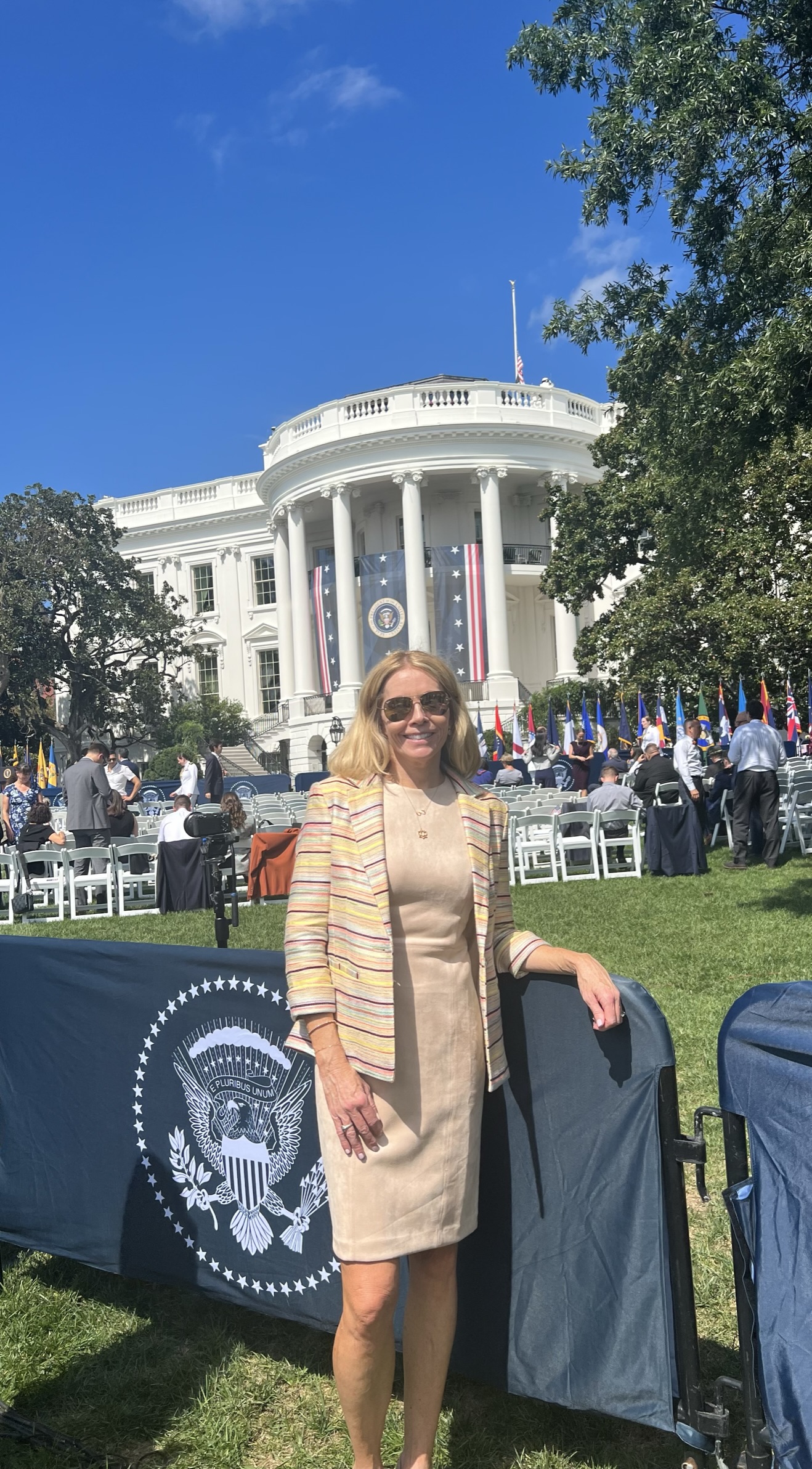
“I have so many memories, but the number one was in September of 2022. I got a text from her on the lawn of the White House, sharing pictures from the event celebrating the Inflation Reduction Act and the historic climate bill,” Dorsey said. “I remember saying to my husband, ‘I don't know if people realize this is a person who has spent the last 20 years of her life for this moment.’ I was just really happy for her and that major career accomplishment.”
Another win came in 2024 when NSAA received the Most Valuable Partner (MVP) Award from Ceres for climate advocacy. There in D.C. with Link to accept this honor, LaBrie was struck by the company they were in that day.
“Huge players … household names like Netflix and Adobe and Michelin that operate globally," LaBrie said. "The ski industry has been right there, too, since the beginning, and I think that's mainly due to the work that Geraldine has put in over the decades.”
But the weight of so many career accomplishments stacked on her back never slowed her trajectory, according to LaBrie. Link was not content to do anything but keep innovating, pushing the industry forward on sustainability, updating NSAA’s programming and refreshing resources. The 2023 Snowmaking Study, what Link called a heavy lift and a long overdue project, is a perfect example of her predilection for perpetual improvement.
“Documenting the relationship between snowmaking and climate change and setting the record straight with empirical data on snowmaking water and energy use are critical in taking a forward stance on climate resiliency in our operations,” Link explained. “The Snowmaking Study and the metrics it created will be valuable resources for years to come.”
Dorsey had fun collaborating with Link on this project — a return to their roots as they hit their technical meets policy, engineer meets lawyer stride.
“Bring in all the experts, facilitate the dialog, create something that's meaningful for the industry,” Dorsey recapped of their process. “This most recent example is one that more people got to see of what was in that secret sauce, back in the Climate Challenge day, and back in the origination of the Sustainable Slopes. It all had in common Geraldine — her leadership, her vision, her passion, her savvy, her negotiation, her networks, her knowledge — to bring all that together and have it come to fruition.”
The Missing Link
To see her friend honored with NSAA’s Industry Impact Award 10 years after Dorsey’s own acceptance of the same accolade feels meaningful and humbling. Although they’ve worked closely in the sustainability realm, she sees Link’s impact as expansive. It cemented NSAA as an influential policy player punching above its weight in Washington in the name of “this love for and relationship with the land and the environment,” said Dorsey, who’s also learned a great deal from the way Link builds trust to develop partnerships.
Link’s unique capability to connect with colleagues has formed lasting bonds that reach beyond ski area boundaries. Some of that Link chalked up to embarking on a career at NSAA during a golden era, when getting to really know people, meeting their families and sharing experiences was more the norm. In today’s age of increasing disconnection, investing in these kinds of relationships doesn’t come as easy. Still, it’s a deliberate endeavor that’s well worth making, in Link’s view.
She encouraged leaders to take young people under their wing. In turn, she urged fresh-faced folks to go out of their way to say yes to those opportunities — be they engaging with leaders, connecting with inspiring people or spending time outdoors with mentors. Link’s career is full of evidence to support this advice, and she reflected back on invitations received early on that made a profound impact. One of those came from Onno Wieringa, then head of Alta, who arranged for Link to join an explosives route.
“Onno told me in his uniquely chill voice, ‘If you are gonna advocate for us in D.C., you better know the lingo,’” Link recounted. “I will never forget meeting him for 5 a.m. oatmeal, watching assembly in the makeup room and following Piney for a few hours on challenging, high traverses. I was far outside my comfort zone, but I learned so much and felt lucky to have that experience. It made me better at my job.”
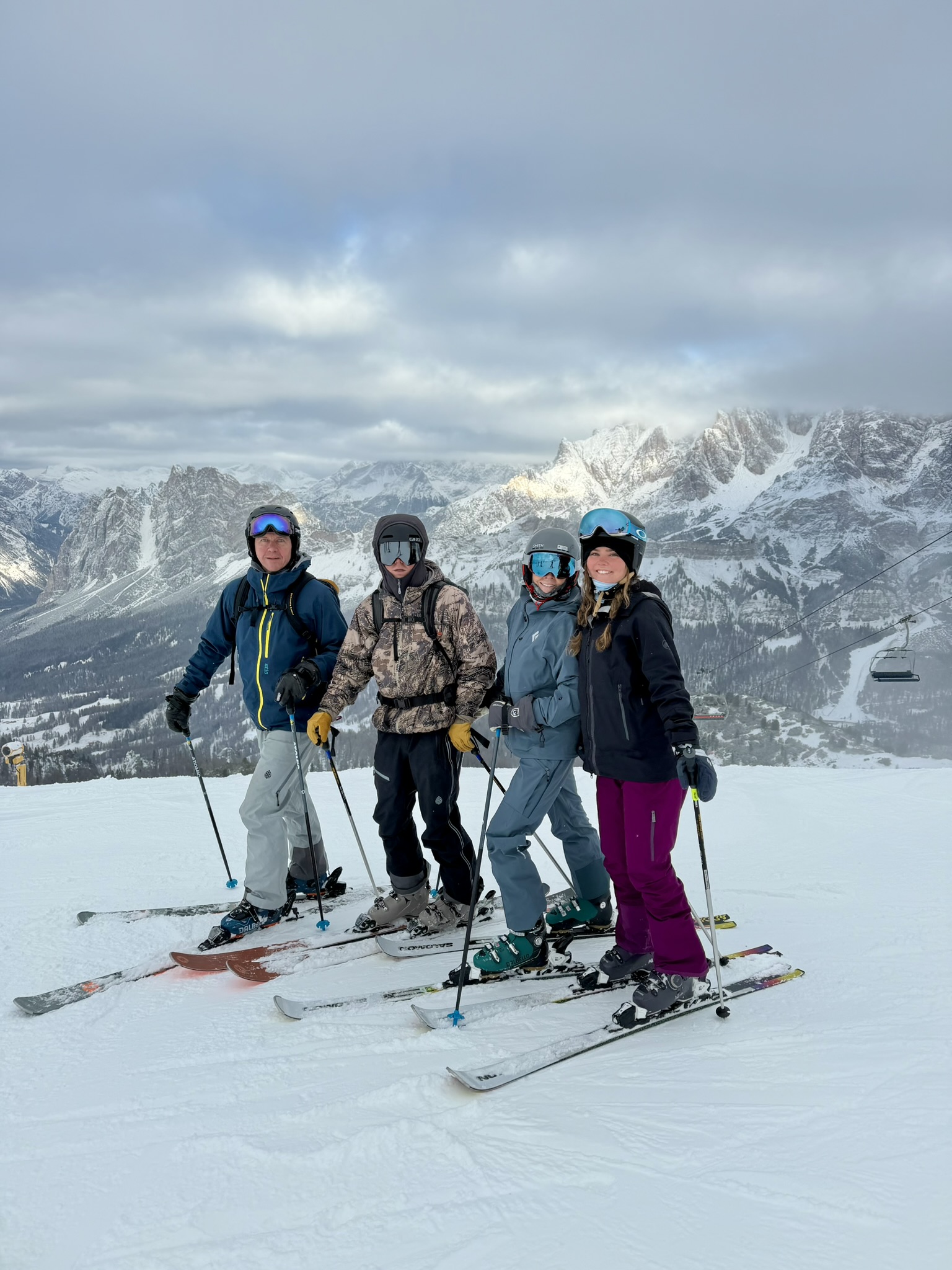
Another invitation that elicited a hell yes, was when J.R. Murray, chief planning officer for Mountain Capital Partners, called Link about a Grand Canyon float trip several years ago. These sorts of experiences beget a closeness that puts everyone on the same team and makes way for open communications (not to mention the glee that comes with fresh air and good company).
“Shortly after a Grand Canyon river trip where we were together with a group on the water and at camp for many days, Geraldine and I were in Washington, D.C., for an NSAA event,” shared Murray. “The hotel provided self-serve coffee near the elevator on each floor. One early morning, Geraldine and I … surprised each other coming around the corner to the coffee machine. Not fully dressed, wet hair, etc. We both laughed and said, ‘just like on the river, who cares?!’”
Murray lauded Link’s ability to maintain relationships, from the smallest ski area owner to the top officials in the U.S. government.
“I have known Geraldine since she began working for NSAA. Almost immediately, Geraldine took the reins and has successfully led the effort to improve the skiing business environment in the public lands, government and legal arenas,” he added. “Her tenure at NSAA is marked by many wins and milestones. I will miss Geraldine at NSAA but will look forward to our continued friendship.”
Deep connections like these and countless others across the ski industry — from time spent with the Crowleys in Massachusetts to trekking in Chamonix around Mont Blanc with Dick Bass and Bob Bonar — fostered Link’s next level love for the job.
“Work doesn’t feel like work when you get to tackle problems and challenges with support from your people,” she added. “Trust me, the last 28 years have flown by because I found my people.”